Philip Guston (formerly Philip Goldstein) is no stranger to persecution and tragedy. Born in Montreal in 1913, Guston was the son of Jewish parents who escaped antisemitic hostility in Ukraine. The family relocated to Los Angeles, seeing firsthand the horrific discrimination and violence against African Americans (epitomized by the release of the KKK-glorifying film The Birth of a Nation). At the ripe age of ten, Guston came across the hanged body of his father, who had killed himself in their family’s shed. Perhaps succumbing to the hopelessness triggered by the ugliness of the world. Humans lacking humanity.
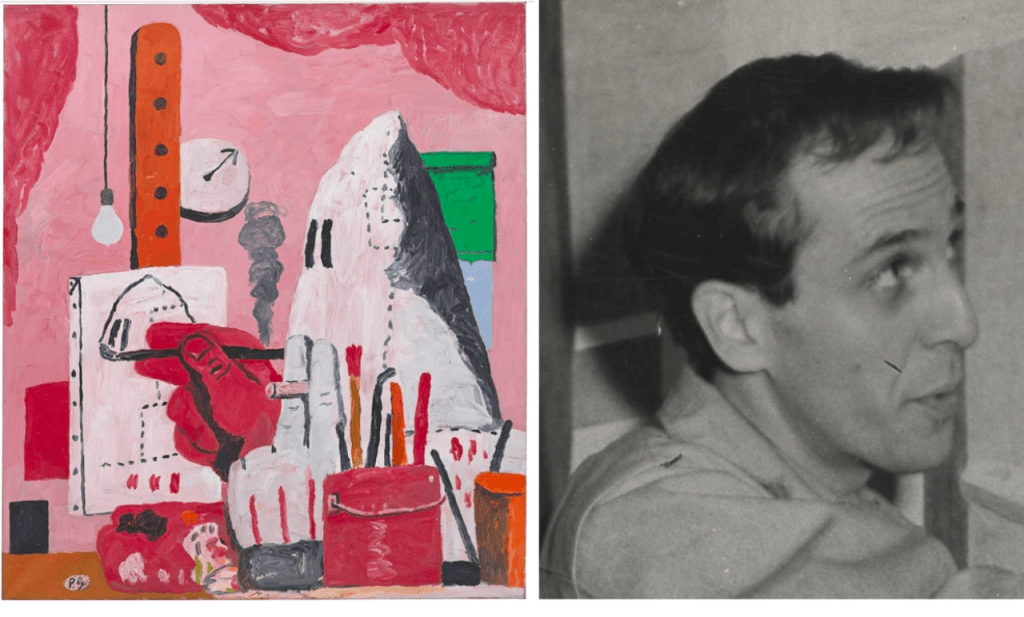
At an age when many would be embracing their adolescent freedom, Guston was fighting for that of others. When he was 18, he collaborated with another artist to create an indoor mural. The mural tackled systemic oppression and aimed to promote fundraising to defend the Scottsboro Boys–a group of nine African American boys falsely accused of raping two women in Alabama. The mural was defaced by local police who were banded together against communism; their group had a national presence in major cities and was labeled the Red Squad. The LAPD was found innocent although the mural experienced irreversible damage.
With his heightened sociopolitical consciousness, Guston used art as an avenue to represent suffering, hatred, and modern plights. He turned away from the Abstract Expressionism that was popular at the time and instead chose Neo-Expressionism. Despite the dark subject matter, his works appear almost cartoonish and comical in his plump, vibrant figures. There is a layer of playfulness and palatability. Almost as if the insidious lurks beneath the surface where you can only notice it if you look hard enough.
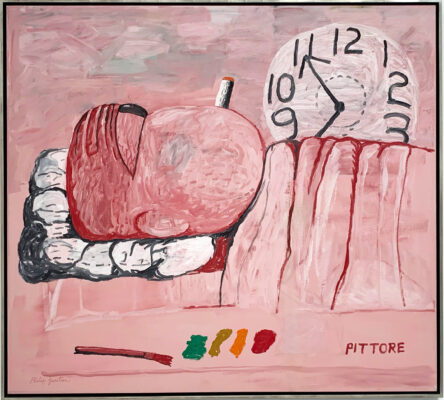
Pittore is Italian for ‘painter’. I think we can all relate to those bloodshot eyes of exhaustion. The clock points to 11. Is it 11pm when the figure is battling insomnia? Or is it 11am when he is finding it difficult to muster the will to rise up out of bed?
I believe this quote from Guston echoes the sentiment that I imagine a lot of politically-minded artists face as they grapple between art-making and taking part in civic engagement on the streets:
“What kind of man am I, sitting at home, reading magazines, going into a frustrated fury about everything—and then going into my studio to adjust a red to a blue?”
Philip Guston
In Pittore, we may identify the figure as Guston himself. His paintbrush and paints are laid out next to him. A reminder of his life’s path. The pillow underneath his head resembles teeth; I imagine him being chewed up, spit out, and forced to exist as this regurgitated shell of himself. Cigarettes are visible in a lot of Guston’s art including Pittore. I think they signify a coping mechanism. In the early 70’s when this painting was made, cigarettes weren’t as vilified as they are today. However, some sources mark this precise year as the rise of an antismoking ethos. I’m sure many viewed it as a necessary evil, in addition to alcohol and other substances. A temporary distraction that provides fleeting pleasure, instant gratification, and numbness.

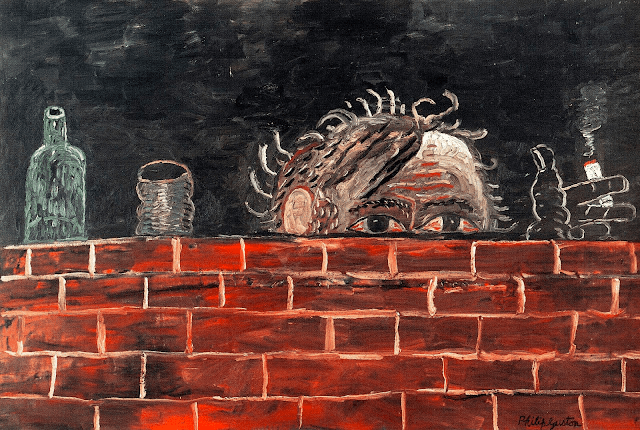
Two words come to mind when I look at Guston’s paintings: collective trauma. Guston really captures the defeat many of us feel at some point–whether it’s due to something personal, societal, or a mash-up of both. His artwork is full of symbols encapsulated by every day objects. Eyes become both windows to the soul but also windows to a bleak reality. There’s something very grim about these colorful images. It makes sense given the cruelty Guston witnessed.
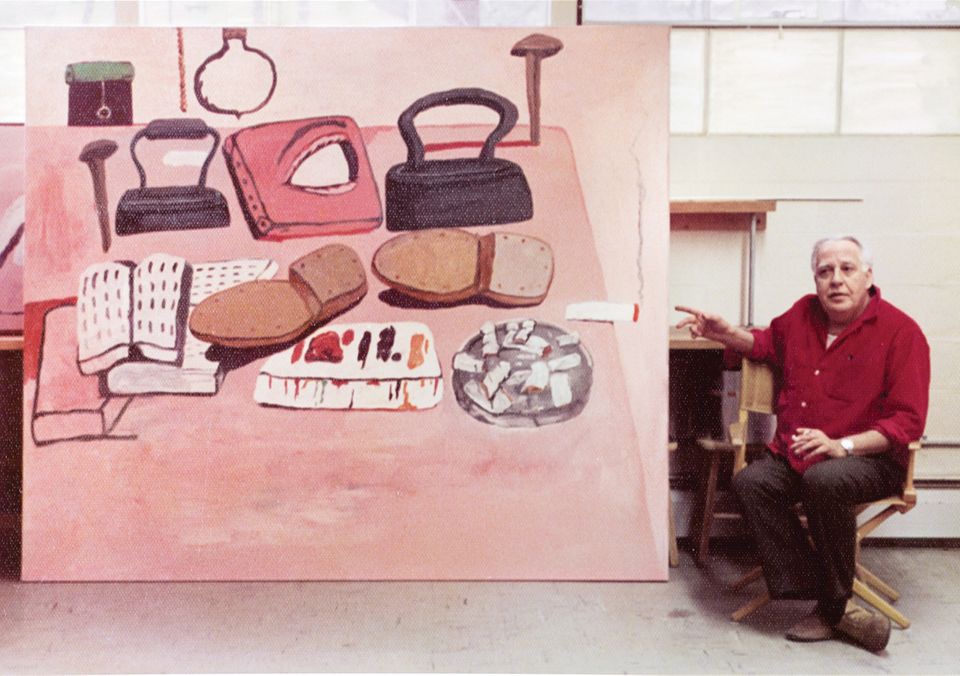
I’ve seen Guston’s art exhibited across North America from Montreal to Seattle to San Francisco to New York City. His canvases are huge. They’re loud and they jump out at you, demanding that you look both inward and outward. It’s impossible not to be consumed by the uneasiness he portrays. It corrodes our insides and burns into our psyches. We cannot help but harbor cynicism as we navigate the world and everything it throws at us.
 A Place for Words