Guim Tió’s “Fighetta” (2013)

Guim Tió, Fighetta, Parma, Italy (2013) – source

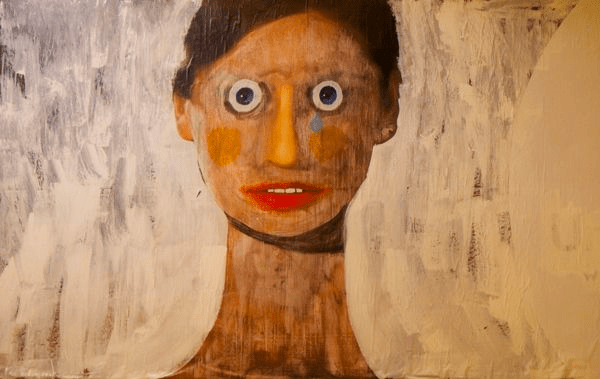
I think I had the same immediate reaction to Guim Tió’s Fighetta as most people do: that’s f*cking terrifying. It reminds me of Tik Toker @lights.are.off (warning: scary) and their unnerving animations. Maybe this painting is not that unsettling, but it’s still pretty creepy.

Guim Tió Zarraluki is an up-and-coming Spanish artist with a pretty wide artistic vocabulary, full of different styles and mediums. I’m most drawn to these bizarre googly-eyed, deer in headlight portraits of his. His artistic process really bolsters the overall meaning:

In his practice Gium Tió alters fashion magazine images with chemicals and oil pastels transforming attractive models into abstract, and sometimes unsettling, figures. The primordial picture is almost completely buried by a new geological level. Only a small part of the magazine is left untouched or barely altered, as a trace of the subject’s past life.

via Widewalls
FIGHETTA by Guim Tio via Vimeo

Fighetta can be seen as a painting, an installation, and a performance piece all in one. The above video gives you a speedy glimpse into the process. The eyes are an especially haunting part of the image and to see that all he did was draw these large white inner-tubes around the model’s pupils demonstrates how easy it is to make the beautiful haunting.

The only parts left untouched are her irises, her nose, and some of her hair. The rest is painted over so to be grotesque, unrecognizable, and bare. Tió paints over the brand, website, and product placement for this Artcafé (which clearly loves to use beautiful women in their marketing campaigns). Sex sells.

In a way, I think Tió is exposing this ugly underbelly of the exploitative nature of advertising. A tear dripping from her left eye is evidence enough that something’s upsetting her. Maybe she’s crying on behalf of all women made one-dimensional by media and advertising. Or maybe she’s crying for all of us. For the masks we plaster onto our faces in public to appear presentable. Is being a social being a form of advertising in and of itself? Are we constantly self-promoting as a way to assert our worth?

Tian, 2013 – source

Fighetta and the fact that Tió appropriates images from fashion magazines reminded me of collage artist Hannah Höch, who was banned from exhibiting her critical artworks during the Nazi regime. (If the Nazis don’t like you, you’re doing something right.) It also reminded me of the work of Martha Rosler who famously “brought the Vietnam War into the American living room.” All 3 artists make it so you can’t look away. Hell, Tiós painting is on a large-format billboard.

I think just about all reframings of pop culture serve as a commentary on identity and politics. It makes you wonder what about that specific imagery prompted the artist to spotlight it. It’s about positioning something we may take at face value in a petri dish. To be studied. Looked at again, but this time closer and with a different context or decontextualized altogether.

Some of Tió’s other portraits echo this uncanniness. Like Tian shown above. I think this style is laughable in its creepiness. I think Tió is a bit of a jokester, but kind of like the Dadaists’s beliefs: it’s a serious joke. The wide-eyed, long-necked woman. The mischievous-, conniving-looking boy. There’s an interiority we can’t really infiltrate and maybe we’re deterred by the unsettling nature.

We don’t know what they’re thinking, but somehow we can resonate with it. Maybe we feel that way on the inside.
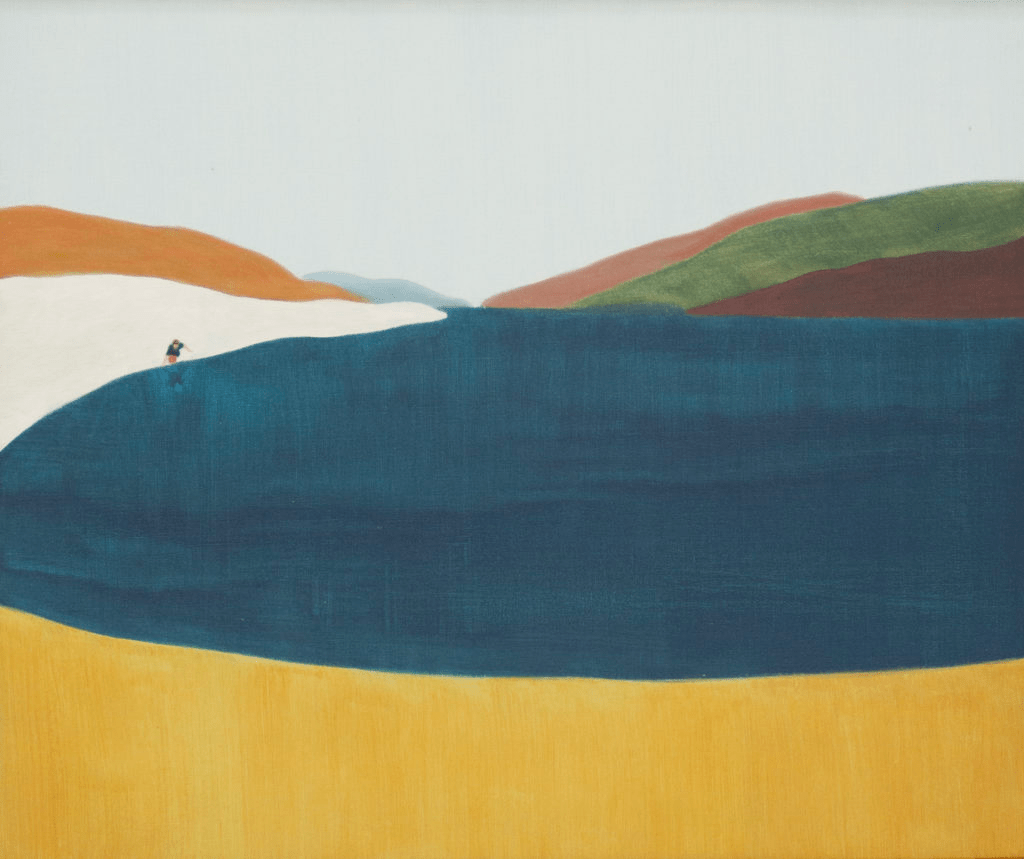
L’últim soldat (2018), oil on linen – source

Tracey Emin’s “My Bed” (1998)

source

Art imitates life. So people say. I’d argue that art can both imitate and transcend life. Delve into the imagination, subconscious, and abstraction. But Tracey Emin’s My Bed really does imitate life. It doesn’t even feel like an imitation; it’s life framed as art in the form of an installation piece. Of course, this can bring up everyone’s favorite “is this really art?” question, which I think is especially common (and warranted) when encountering the Young British Artists (YBAs) and conceptual art in general.

All of that aside, I love the idea of a self portrait without the body. The self as a collection of belongings. People say you are what you eat. They say you are who you surround yourself with. How about you are what you own? Especially in a material culture, aren’t the things we buy evidence of who we are? What we like? What we think we need?

My Bed was met with astonishment when it was exhibited at Tate Britain’s 1999 Turner Prize exhibition. As is to be expected, not all reactions were positive–and still today are mixed–with many considering it cheap or lacking real substance. “It’s just an unmade bed”. I agree that what we’re looking at is an unmade bed, but I find it incredibly thought-provoking with and without context. We can ascribe our own experiences to the work and/or consider the artist’s emotional state and physical being in relation to these objects.

Tracey Emin, source

Emin created My Bed when she was 35, emerging from a traumatic break-up. The installation piece is a mess of things. A lot of which suggest that the owner of the bed isn’t doing so hot. Condoms, vodka bottles, cigarette butts, pantyhose.

I had a complete absolute breakdown and I spent four days in bed. I was asleep and semi-unconscious. When I eventually did get out of bed, had some water, went back and looked at the bedroom and couldn’t believe what I could see: this absolute mess and decay of my life.

Tracey Emin on My Bed for TateShots

Most of us have gone through something devastating. Whether it’s grief over a death or breakup, major depression, or another crisis entirely. While our “breakdown sanctuaries” all look different, this experience of pain is universal albeit the details unique to each individual. What would your breakdown bed look like? What would it say about you and how you cope with despair? What do you numb yourself with?

I especially like the consideration that went into staging the installation in a gallery with Francis Bacon’s art. It zooms out on something that seems very personal and makes it so that it can be applicable to anyone. After all, we all lay down to sleep. Sleep is arguably the most vulnerable thing in life. Video below:

I will note that although it was originally exhibited in 1998, My Bed has gone on to be displayed at tons of shows around the world. Emin has spoken to how the installation has changed over time. She notes that “all the objects and the bed get further and further away from [her].” Just like how with time, we get further away from our trauma. While it may or may not grow smaller in our minds, that doesn’t diminish the pain we felt at the time. When we were stuck laying in our beds.

Christina Quarles’ “Laid Down Beside Yew” (2019)

via Artsy

Christina Quarles’ contorted bodies with long outstretched limbs, detailed hands and feet, and swaths of color that melt into each other probe the idea of how we understand and perceive our bodies. A lot of the time, it’s unclear what parts belong to whom, but these elongated, twisting figures are really mesmerizing.

I saw Quarles’ solo exhibition at the Frye Art Museum and I was blown away by her huge paintings. Her colors are electrifying and her abstract forms create this sort of fantastic jumble of…so many things. Quarles has made it abundantly clear that she’s interested in how we exist within our bodies.

I found it especially thought-provoking when she articulated that she purposefully renders hands and feet more detailed than the rest of the body because we don’t see look at our own faces; we see our hands and feet every day. This is what we know of our bodies.

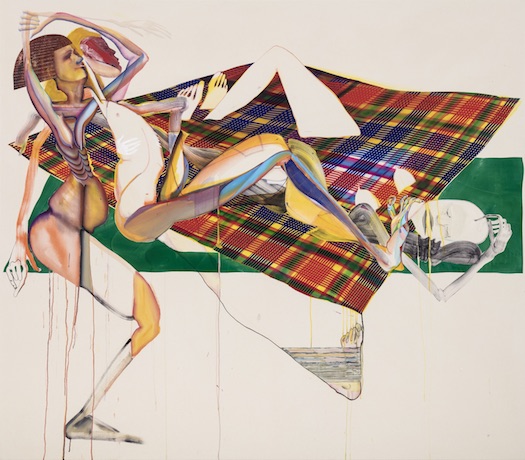
Although all her paintings and drawings really captured my attention, Laid Down Beside Yew specifically caught my eye. I love the plaid plane, reminiscent of a kite or a picnic blanket that the bodies break through as if it’s made of water. The figures and their relationship to one another are intimate. The expression of the rightmost figure laying down is vulnerable. Its arm skeletal. Its breasts peeking through the plaid.

The many breasts on the leftmost figure resemble udders. You can’t fully appreciate Quarles’ paintings in pictures because the textural elements don’t really show up. The hair on the same figure looks like it was made using a rake, these curved, squiggly lines juxtaposing gradients of color that look as though they’re seeping into the canvas.

Although tangled with one another, the bodies seem liberated. In some of her paintings, there is this feeling of being trapped in a body; however, in this one, the way the bodies are sprawled out makes them seem casually confident. It’s as if they’re simultaneously comfortable in their bodies while also longing to break free of them. I feel that there are a lot of contradictions like this one in her work. There’s comfort and discomfort. Jumbled messiness depicted with care.

We know ourselves as this fragmented jumble of limbs.

via ARTnews

Quarles’ intelligence shines through in her words and paintings. With a background in philosophy and a keen interest in critical race theory, she’s definitely a thinker. She’s concerned with human nature and our interactions within society, how these regular experiences within our minds and bodies shape our perspectives. Laid Down Beside Yew embodies these notions of identity and self-consciousness.