image via elephant.art
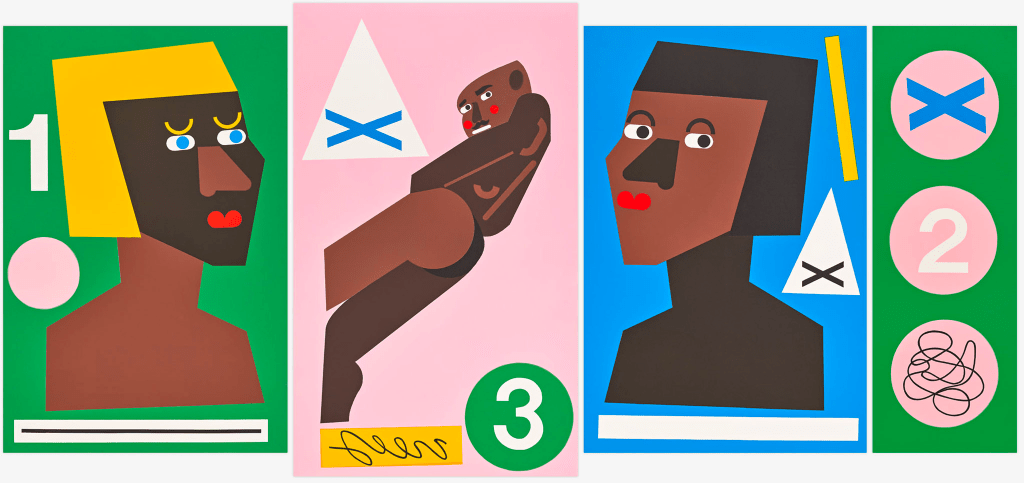
A word that appears across a lot of African-American artist Nina Chanel Abney‘s works is “wow”. Fitting, because that’s exactly what I think when I look at Nina Chanel Abney’s breadth of work. Her colors, geometric backgrounds and figures, and style that resembles cut paper are enough to illicit that sort of response.
This quote from the artist’s biography on her website perfectly encapsulates the intention and impact of her work:
Through a bracing use of color and unapologetic scale, Abney’s canvases propose a new type of history painting, one grounded in the barrage of everyday events and funneled through the velocity of the internet.
ninachanel.com
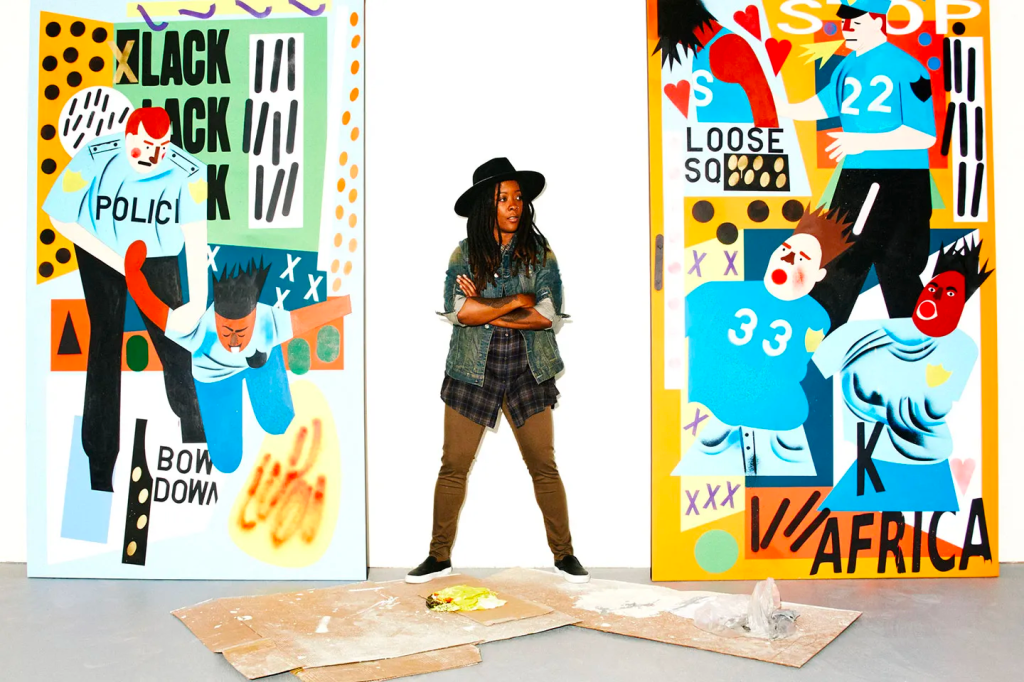
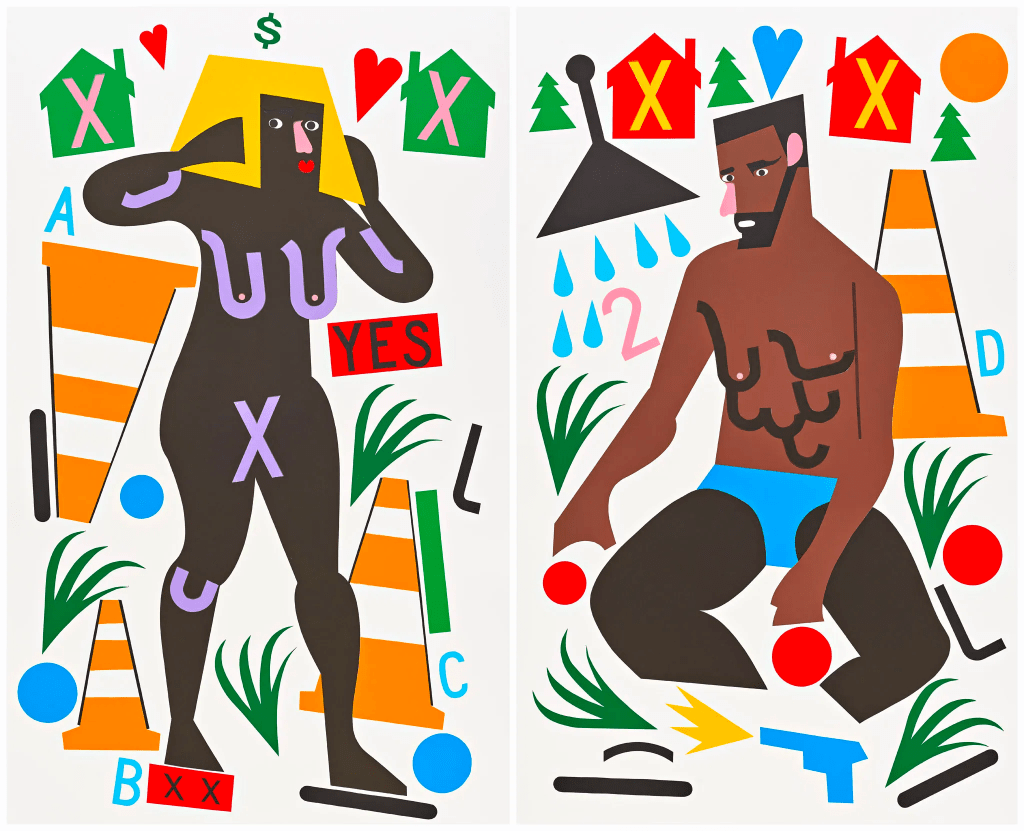
Her works, which include paintings, collages, figurines, UNO decks and other common items like plates and phone cases, deal with themes such as race, sexuality, gender, and police brutality. Every piece can be dissected and discussed for hours. Combining language, people, animals, food, and other imagery, her paintings are a mesmerizing coalescence of symbolism. Her art has been deemed provocative in that it spotlights issues that many people pretend aren’t legitimate. You could call this denial a form of gaslighting.
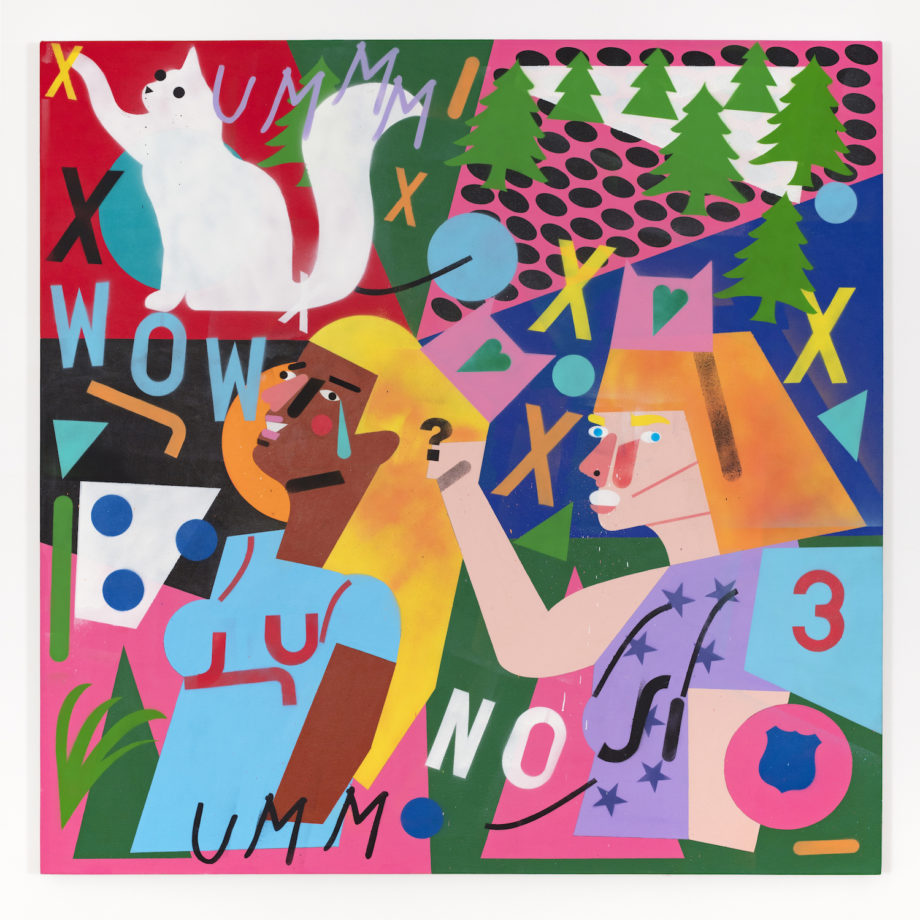
When I came across Whet, I immediately thought of Solange’s “Don’t Touch My Hair” (2016). An assertion of the autonomy of Black women and refusal to be seen by others–especially white women in this case–as mere objects of intrigue. A callout of how Black women are both trivialized and othered, leading to problematic understandings of Black women as existing for white pleasure and entertainment. This enduring perception is belittling and reductive. Fascination with Black women’s hair (which is inextricably tied to a cultural history), bodies, cadence, etc. can manifest as fetishization, appropriation, micro-aggressions, stereotypes, and flat-out racism.
Whet depicts a white woman, bearing a rather aggressive expression, yanking the hair of a Black woman. The white woman wears something on her head resembling a crown, maybe alluding to her entitlement. The Black woman sheds a tear, which could represent the fact that Black women must internalize their pain or otherwise be deemed as hotheaded if they assert themselves. The Angry Black Woman trope.
The letter X is another motif across Abney’s art. It could connote explicit content, barred access, negation, a number of things.
Something I noticed when looking closer at Whet was the silhouetted police bag encircled in pink at the bottom right corner. I think it serves as a reminder that the police overwhelmingly side with white folks. Vilifying Black people and victimizing white people. Historically and today.
Given its color, I imagine that the white cat at the top of the painting is the white woman herself. Abney likens the cat’s instinctive, thoughtless swatting to white women’s impulsively putting their hands on Black women. There’s so much to unpack in this image. Like I said, so many of Abney’s works carry this depth. Layers upon layers of meaning on flat surfaces. A pop art-esque array of color and movement that centralize the Black experience, discrimination, and challenges that can’t continue to go unchecked.